Gauge
How to Calculate Crochet Gauge — and What to Do When It Doesn't Match
Crochet gauge tells you how many stitches and rows fit into a given measurement. It is one of the most important numbers in a fitted project because it connects the written pattern to the physical size of your work.
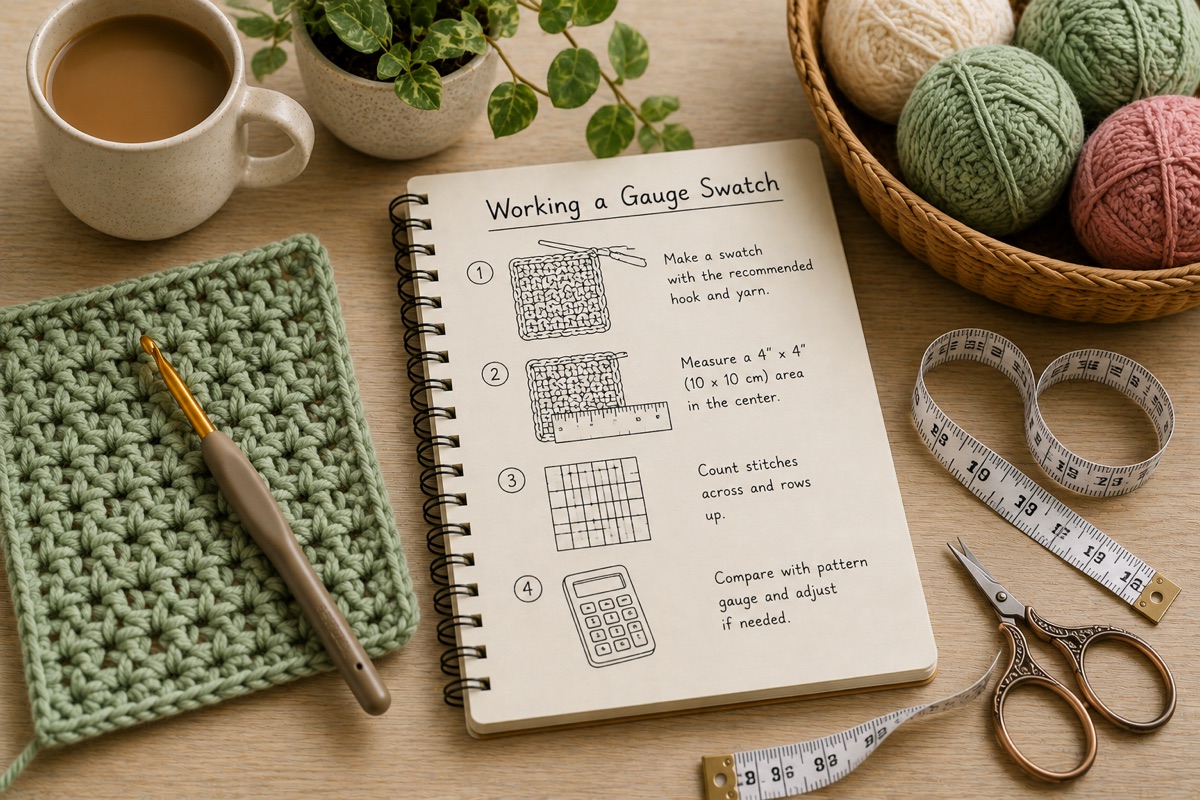
How to approach it
To calculate gauge, make a swatch larger than the measurement you intend to count. Measure a central area rather than the edges, then count the stitches and rows inside that area. For example, if 18 stitches measure 10 cm, your stitch gauge is 1.8 stitches per centimetre.
If your swatch has more stitches than the pattern specifies over the same width, your stitches are smaller and your fabric is too tight. A larger hook or needle may help. If you have fewer stitches, your stitches are larger; try a smaller hook or needle. Change one variable at a time and make another swatch.
Before you start
Row gauge matters most when a pattern depends on a fixed number of rows for shaping. In other projects, length can sometimes be worked directly to a measurement.
Always measure a washed or blocked swatch when the finished item will also be washed or blocked. Fibres can relax, grow or shrink.