Yarn
How to Substitute Yarn Without Ruining Your Project
A good yarn substitution is not simply another skein with the same weight printed on the label. To preserve the size and behaviour of a project, compare yarn thickness, gauge, fibre characteristics and total length.
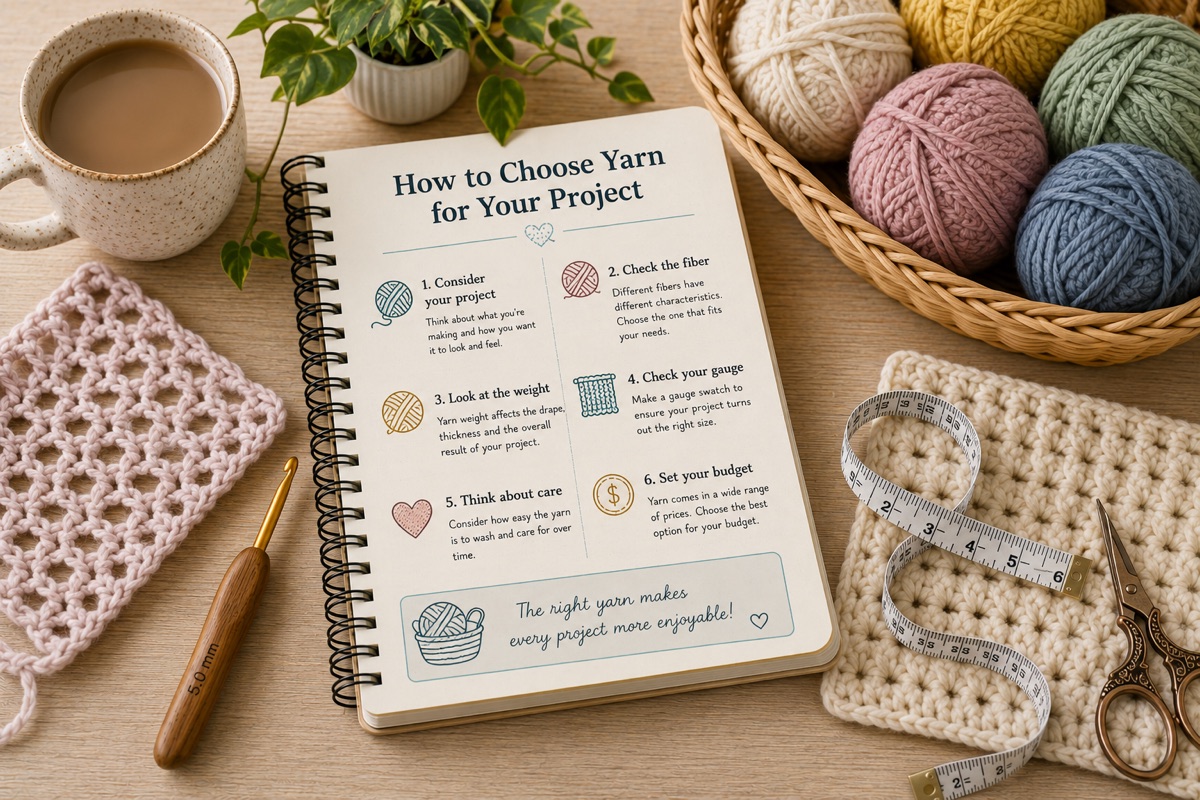
How to approach it
Start with the yarn category and the recommended gauge. Two yarns classified in the same weight category can still behave differently, so make a swatch with the replacement yarn. For garments, matching gauge is more important than matching the exact hook or needle size listed in the pattern.
Next consider fibre. Cotton has different elasticity and drape from wool; acrylic behaves differently again. A substitution can match the gauge while changing the feel, weight or structure of the finished fabric.
Before you start
For quantity, compare length rather than the number or weight of skeins. If a pattern requires eight skeins containing 120 m each, the original requirement is 960 m. If the replacement contains 170 m per skein, divide 960 by 170 and round up. Add an appropriate safety margin.
Also check whether the project uses several colours, because each colour may need to be calculated separately.